SnapshotNIR-Guided Flap Viability Monitoring in Reverse Sural Artery Fasciocutaneous Flap Surgery
Case study courtesy of: Austin Mishko, DPM
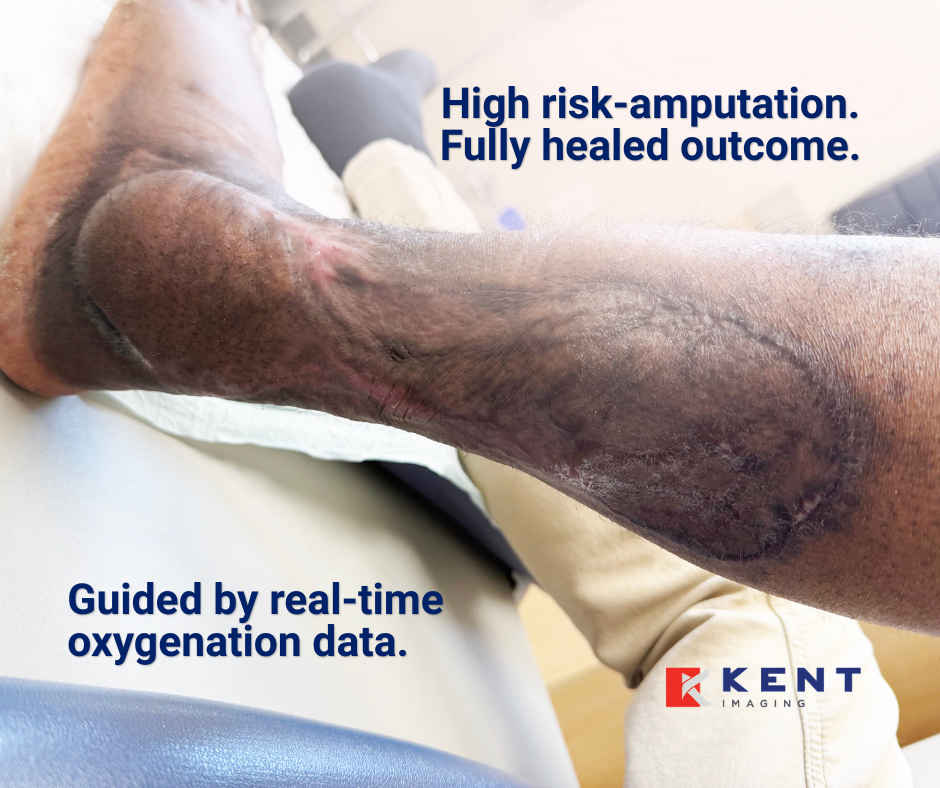
When Amputation Seemed Likely, oxygenation Data Helped Change the Outcome.
See how Dr. Austin Mishko, DPM, used SnapshotNIR to monitor flap viability through the highest-risk days of a complex limb preservation surgery, resulting in a viable flap, and a wound ready for the next phase of treatment.
The patient was a 49-year-old man with necrotizing fasciitis, exposed tendons, uncontrolled diabetes, and peripheral arterial disease, and was at serious risk of losing his leg. After angioplasty and a reverse sural artery fasciocutaneous flap reconstruction, the question was would the flap would survive.
SnapshotNIR gave Dr. Mishko objective StO2 readings at specific intervention checkpoints at the point of care to help guide critical clinical decisions.
Download the case study to see the full healing process.
The Impact of the snapshotNIR
“SnapshotNIR gave me good indication that the fasciocutaneous flap had enough oxygenation to heal. The fact that it is easily portable meant that I could take it to the patient’s hospital room on the first post-operative day to continue to monitor .”