

How can you be sure if a wound has harmful bacteria?
The answer: SnapshotGLO detects the fluorescence associated with bacterial loads
See the fluorescence. Understand the bioburden. FDA 510(k) Cleared.

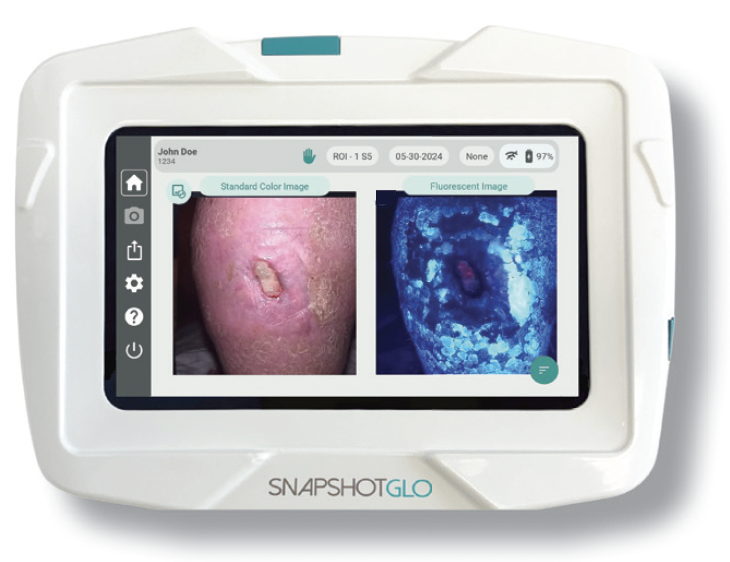
Real-TIME, ACTIONABLE SINGLE-CAPTURE DATA
SnapshotGLO is a handheld, portable imaging device that detects the fluorescence associated with bacterial loads, monitors wound healing, and assists clinicians’ decision-making for first-line treatments.
Using safe, ultraviolet (UV) light, SnapshotGLO provides users with a visual of elevated bacterial loads in a wound by detecting fluorescence emitted from bacteria at loads greater than 10⁴ CFU/g*. The device highlights areas where bacterial fluorescence is present, helping clinicians identify regions that may require targeted intervention.
Bacteria containing fluorophores become fluorescent when excited by UV light. As a non-contact, point-of-care device, SnapshotGLO uses UV light to illuminate the wound surface, producing fluorescence signals that indicate the location of elevated bacterial loads. The resulting image displays red and cyan fluorescence.
FDA Cleared
(*colony-forming units per gram)
With a single image capture, SnapshotGLO identifies fluorescence associated with wound bacteria while simultaneously capturing a clinical image for wound auto detection, segmentation and sizing. No reagents or additional markers are required.
SnapshotGLO non-invasively assesses bacterial bioburden at the bedside, providing actionable information early in the care plan. This enables more targeted treatment, supports enhanced clinical decision-making, and helps to reduce risks of improper antibiotic use—all leading to a lowered overall cost of care.

WHY DOES IDENTIFYING THESE FACTORS MATTER?
Delayed diagnosis can lead to deeper infection, sepsis, amputation, and death, particularly in vulnerable populations
Diagnosis of high bacterial loads can be difficult when patients present with multiple comorbidities
Sources:Senneville, É., et al. (2023). IWGDF/IDSA Guidelines on the Diagnosis and Treatment of Diabetes-related Foot Infections. Clinical Infectious Diseases, 77(12), e328–e358. https://doi.org/10.1093/cid/ciad527
2024 ACC/AHA Guideline for the Management of Lower Extremity Peripheral Artery Disease. Circulation (2024). https://doi.org/10.1161/CIR.0000000000001251

The presence & location of elevated bacterial loads can be challenging to identify through visual assessment.
WHAT IF THERE WAS A BETTER WAY?
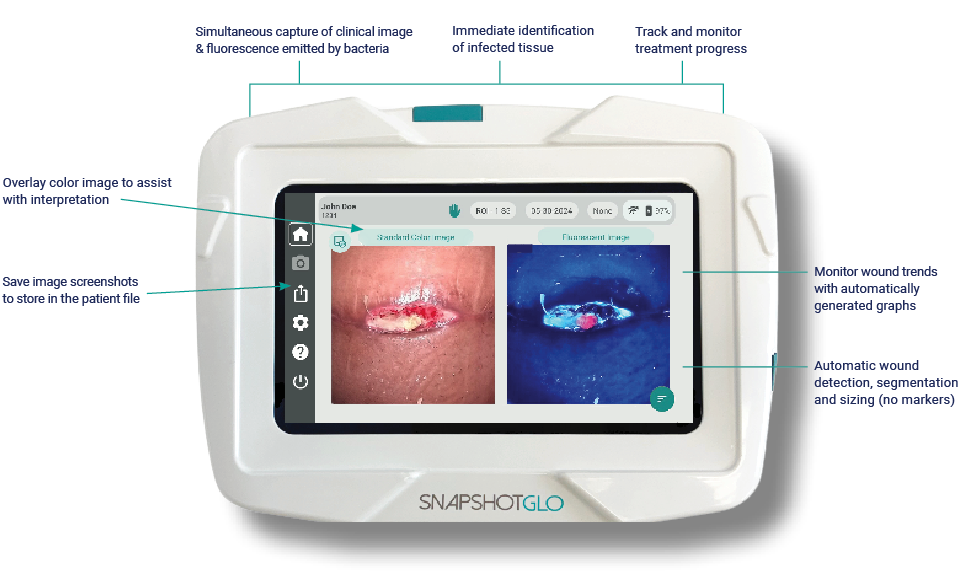
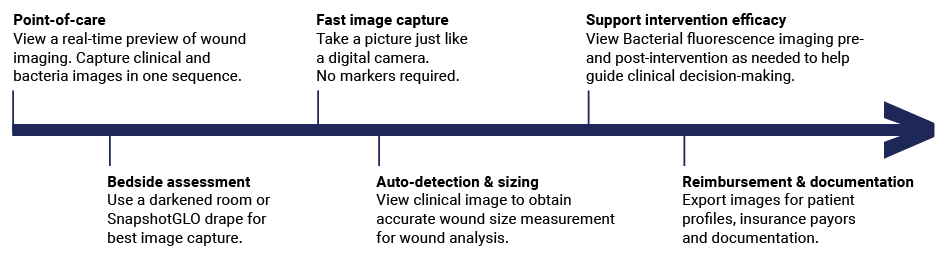
Easily integrate SnapshotGLO into your clinIcal workflow**
Sources:
*U.S. National Library of Medicine. (2026, July 24). AccessGUDID: SnapshotGLO (Device Identifier B376KB1000). https://accessgudid.nlm.nih.gov/devices/B376KB1000
**U.S. Food and Drug Administration. (2025, March 26). 510(k) premarket notification: SnapshotGLO (KB100), K242669. https://www.accessdata.fda.gov/scripts/cdrh/cfdocs/cfpmn/pmn.cfm?ID=K242669