
Advancing wound care through global collaboration: SnapshotGLO in Grenada
SnapshotGLO supports clinicians in detecting bacteria in wounds during Grenada Medical Mission 2026
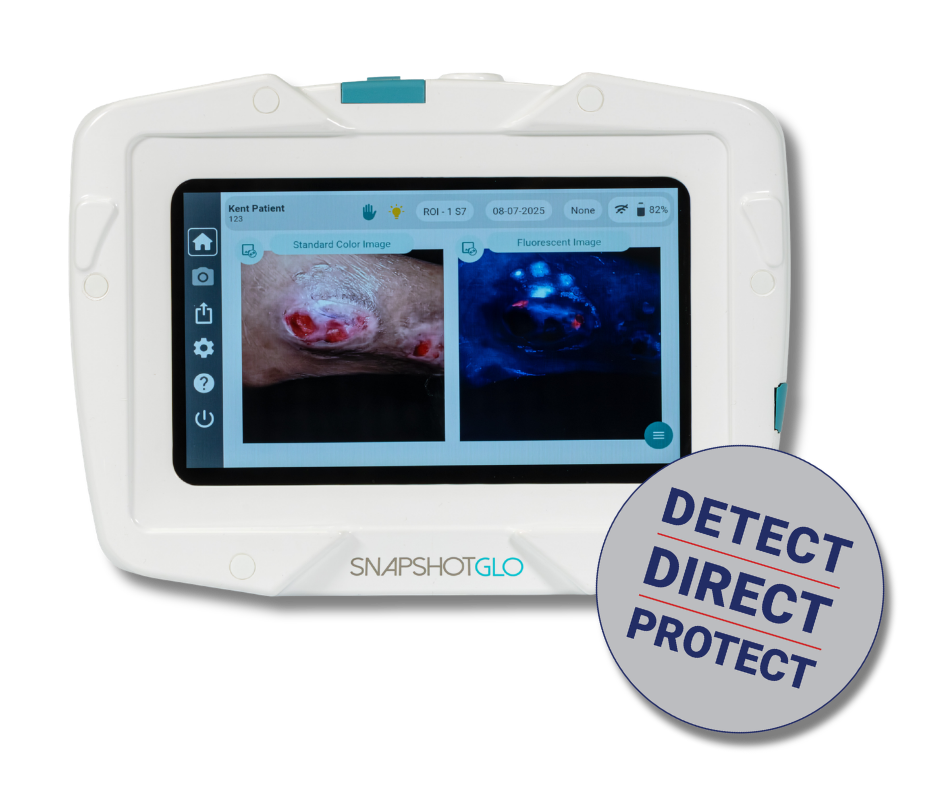
During their 2026 Grenada Medical Mission, Jeffrey Niezgoda, MD, Chief Medical Officer of Wound Care and Limb Preservation at Kent Imaging, alongside Tyler Sexton, MD, brought advanced bacterial imaging technology to a setting where chronic wounds and limited diagnostic resources often intersect. Central to this effort was SnapshotGLO, Kent Imaging’s handheld, point‑of‑care imaging device designed to detect and monitor bacterial burden in wounds.
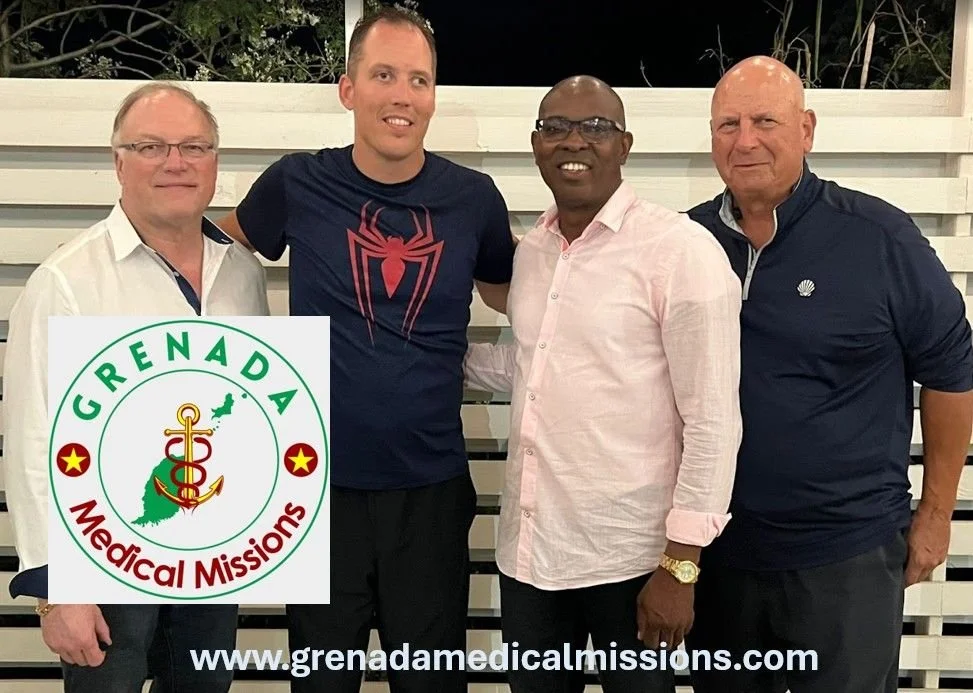
Grenada Medical Mission 2026
The science behind bacterial autofluorescence
Chronic and non‑healing wounds remain a significant challenge globally, particularly in settings where laboratory diagnostics may be delayed or unavailable. In these environments, clinicians often rely on visual assessment alone, making it difficult to identify elevated bacterial loads that can impair healing long before overt signs of infection appear.
SnapshotGLO provides a clinically actionable solution. Using safe ultraviolet (UV) light, the device leverages bacterial autofluorescence (BAF) to visualize elevated bacterial burden directly at the point of care. Bacteria fluoresce when exposed to UV light, allowing SnapshotGLO to capture an image that highlights areas of concern in red and cyan fluorescence, corresponding to the most common bacterial species associated with wound infection. This immediate, non‑contact imaging enables clinicians to identify bacterial loads greater than 10⁴ CFU/g, supporting earlier and more targeted intervention.
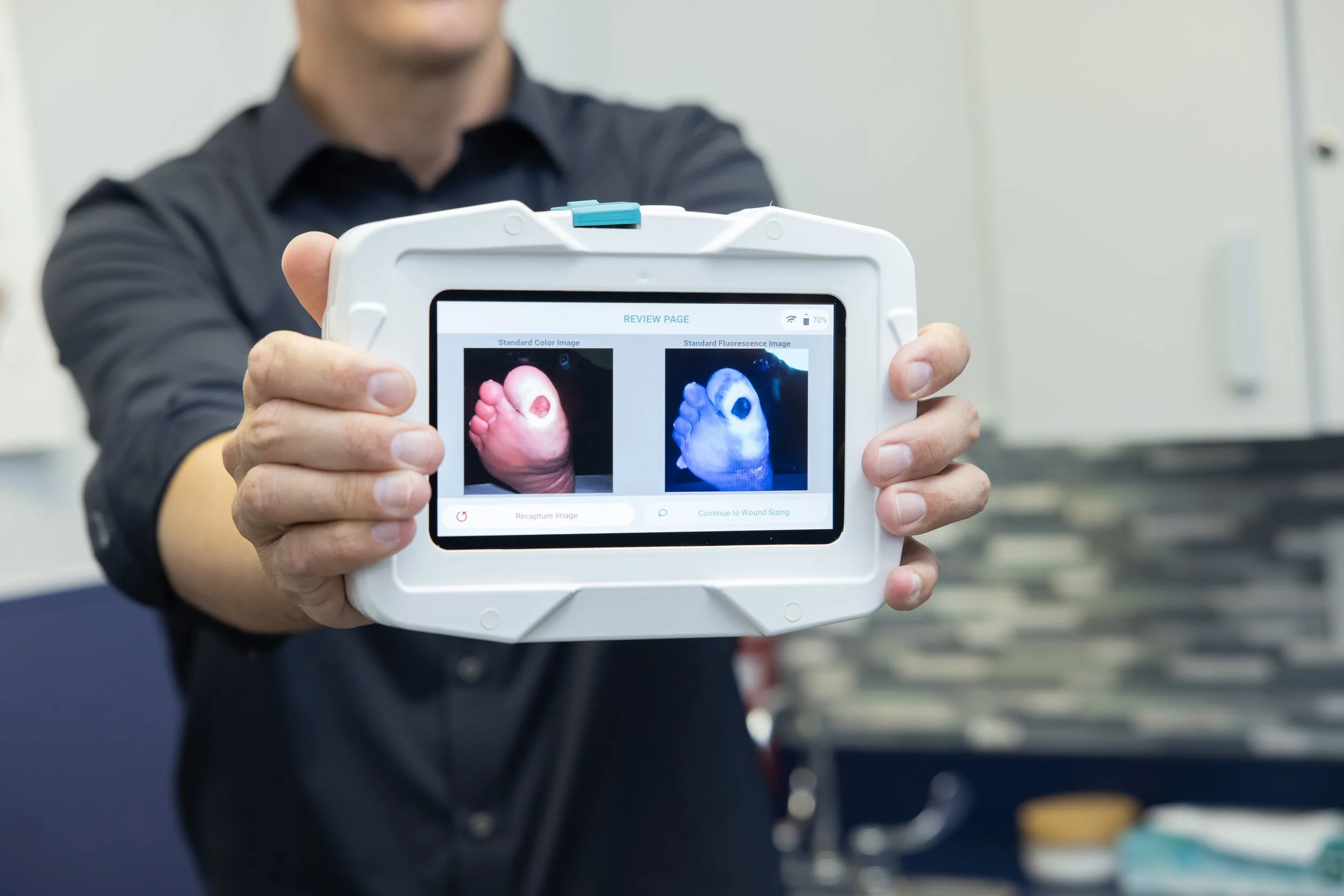
SnapshotGLO device
Venous Leg Ulcer Case Example
Day 3 of the mission brought the technology face to face with a case that exemplified why it matters. A patient presented with a venous leg ulcer that persisted for four years. Standard visual assessment would not have provided the objective data needed for successful intervention.
Initial imaging: The first SnapshotGLO image detected significant bacterial autofluorescence (BAF), seen as red and cyan in the SnapshotGLO image.
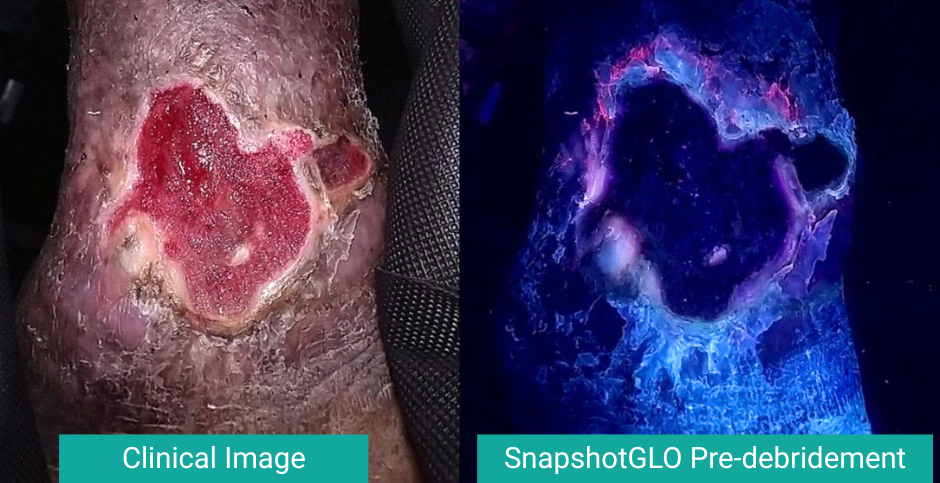
SnapshotGLO clinical and bacterial autofluorescence images pre-debridement
2. Treatment: The wound was treated with a Clyrasept soak and mechanical cleansing, then a second SnapshotGLO image was taken. The broad bacterial signal had cleared substantially, but a focal area of persistent BAF remained, pinpointing where further attention was needed.
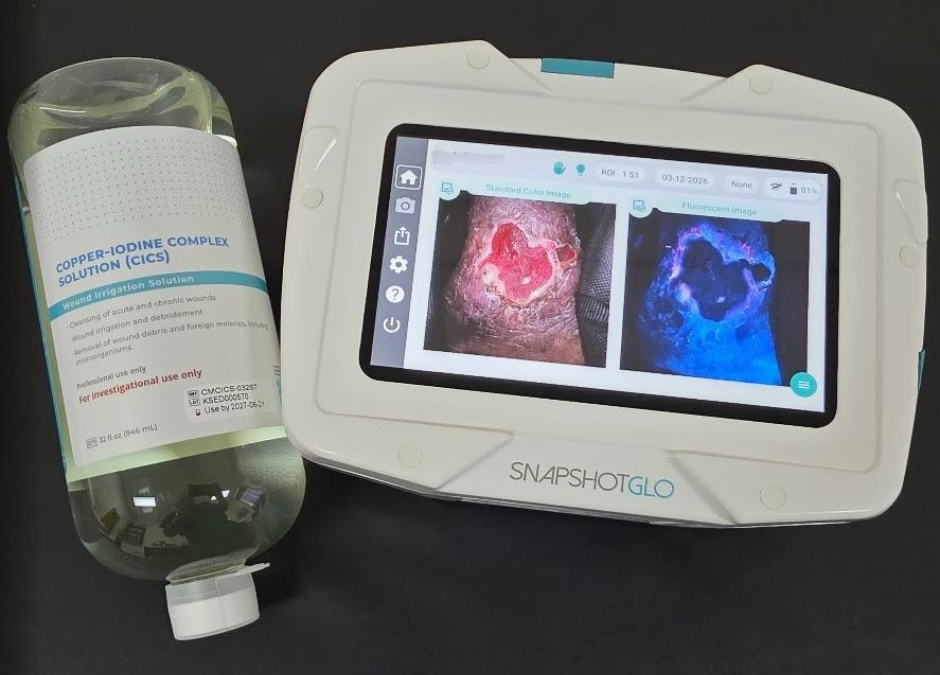
SnapshotGLO device with wound image, and cleansing solution
3. Targeted debridement & confirmation: The team performed focused debridement only where it was needed. A third image (post-debridement 2) showed near-total eradication of the BAF signal, providing a visual confirmation of intervention effectiveness that would have been difficult without real-time bacterial mapping.
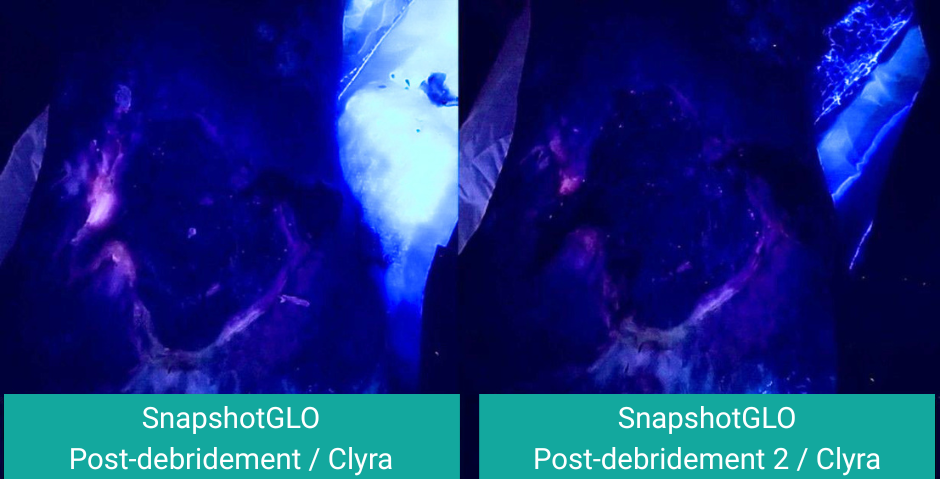
SnapshotGLO clinical and bacterial autofluorescence images following initial treatment of Clyrasept soak and mechanical cleansing (left image), and SnapshtGLO image post-debridement (right image).
The impact of SnapshotGLO
One of SnapshotGLO’s key clinical advantages is its ability to support targeted debridement. By differentiating between tissue with elevated bacterial load and healthy surrounding tissue, clinicians can deliver interventions that are:
More precise
More conservative
More patient‑centered
This targeted approach helps improve treatment effectiveness, supports efficient wound bed preparation, and reduces unnecessary tissue removal. These are critical considerations in both advanced and resource‑limited care settings.

Dr. Jeffrey A. Niezgoda
“One of the greatest challenges in wound care is identifying harmful bacteria early, before they derail healing. SnapshotGLO gives clinicians immediate, visual evidence of bacterial burden at the bedside. In Grenada, that capability allowed us to make more precise, informed treatment decisions and directly observe the impact of our interventions in real time.” — Dr. Jeffrey Niezgoda
Jeffrey Alan Niezgoda, MD, FACHM, MAPWCA, CHWS is Kent Imaging’s Chief Medical Officer of Wound Care and Limb Preservation . He is the founder and President Emeritus of AZH Wound & Hyperbaric Medicine and the President & CMO of WebCME, an international educational company providing wound care and hyperbaric education. Dr. Niezgoda is also the Past-President of the American Professional Wound Care Association (APWCA) and Past-President of the American College of Hyperbaric Medicine. A leader in his field, he is dedicated to excellence in wound, vascular, and regenerative clinical services.

Dr. Tyler Sexton
“Having access to point‑of‑care bacterial imaging changes how wounds are assessed and managed, especially in environments without immediate lab support. SnapshotGLO allowed us to target treatment and debridement with confidence, while also providing a powerful educational tool for local clinicians. The ability to see bacterial burden firsthand is transformative.” —Dr. Tyler Sexton
Tyler Sexton, MD, FACH, MAPWCA, CHWS is the Chief Medical Officer (CMO) at Brevard Regional Hyperbaric Center, Melbourne, Florida; CMO, UrgentFlex Orlando FL; CMO, True Hyperbar Rx, Orlando, FL; CMO, Coastal HyperbaRx Ocean Springs, MS; and CMO, Precision Hyperbarics, Tampa, FL.
Collaboration and education to advance wound care in all settings
Detect, direct, and protect with SnapshotGLO
In addition to bedside use, SnapshotGLO served as an educational tool throughout the mission, helping local clinicians visualize bacterial burden and better understand its role in delayed healing. Dr. Niezgoda and Dr. Sexton also met with Grenada’s Minister of Health, Hon. Philip A. Telesford, to discuss the role of advanced imaging technologies in strengthening wound care delivery across the region. Mr. Dave Zansitis, VP of Clinical Affairs, Clyra Medical Technologies, participated in the Mission and introduced Clyra to Grenada by demonstrating its effectiveness.
Whether in a major medical center or a remote clinical setting, SnapshotGLO equips care teams with immediate, interpretable insights that support earlier intervention and more confident decision‑making. By making bacterial burden visible at the point of care, Kent Imaging continues to advance its mission: empowering clinicians, protecting patients, and improving healing outcomes worldwide.
Case and images courtesy of Dr. Jeffrey A. Niezgoda and Dr. Tyler Sexton.
Want to learn more about SnapshotGLO?
Read the case series on using SnapshotGLO to guide debridement for chronic wounds
Read the case study on SnapshotGLO for pre- and post-intervention on a surgical wound
See the Clinical Posters featuring SnapshotGLO